Natural Stone Flooring
Most Frequently Asked Questions (FAQ's)
There's nothing more beautiful than walking into a room where natural stone flooring has been installed.
Marble, travertine, granite... they each have their own unique style and beauty. However, as we all know, floors are meant to be walked on. They will get dirty and accidental spills are likely to happen. Read on to see if there's an FAQ that can benefit you and your natural stone floors.
Browse through more FAQ's below!
 |
 |
 |
| Stone, Wood & Tile Floors |
Heavy Duty Tile & Grout |
Floor Polish |
- Q. Our marble stairway is really slippery when it's wet. Do you have a solution?
A. Find an EXPERIENCED Natural Stone professional to use an acid treatment on your stairs. Your Marble stairway will not be shiny anymore but it won't be slippery either. - Q. Will a sealer make my floor slippery?
A. A sealer such as this sealer is designed to penetrate below the surface of the stone. Because of this, it will not make your natural stone flooring any more or less slippery. It won't change the color either. - Q. I have travertine natural stone flooring in my living room, foyer, guest bath, and dining room. Should they be sealed?
A. Polished travertine is quite dense and usually doesn't need to be sealed. When you have a dense natural stone, it will absorb very little if anything, including sealers! If your travertine flooring is polished, the "fill" may not be stain resistant and neither will the grout lines. You could seal the floors where staining may be an issue.
I would be more concerned with surface damage from etching. This natural stone is a calcite based stone and prone to etching. To avoid etching, don't use harsh cleaners. Use a stone friendly floor cleaner such as:
Marble, Granite and More Floor Cleaner, OR
Heavy Duty Stone, Tile and Grout Cleaner.
AND, wipe up any spills ASAP!
Always remember, sealers are used to avoid staining.
Impregnating sealers do not prevent etching / surface damage. - Q. My wife and I want to install travertine tiles in our living room. Do they feel cold underfoot?
A. Yes. The coolness feels nice in the warmer months. To "warm up" your Natural Stone flooring in the colder months, install radiant floor heating. - Q. How do we keep the grout clean between our travertine tiles?
A. First, clean and remove any dirt or discoloration with a product such as the heavy duty tile and grout cleaner.
Second, apply a good quality sealer. This stone is usually pretty dense but the fill and grout lines aren't. - Q. My brand new travertine natural stone flooring was sealed with 3 coats of sealer. I accidentally spilled orange juice on it.
I wiped it up immediately and washed the area with warm soapy water. Now I have a dull mark there! Should I seal it again?
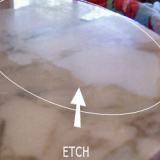
A. No, don't seal it again. Your floor is etched. This was caused by the acids in the orange juice. Travertine is a calcite based stone and acidic substances will cause etching or surface damage to your stone.
If the etching is mild to medium, (the discolored area feels smooth) use a polishing powder. It's easy to use and will remove light to medium etches.
If your etching is severe, (feels really rough) call a natural stone restoration professional. - Q. I've just had a travertine floor installed in my bathroom. My shower and vanity top are also travertine. I want to clean the
toilet, sink, and mirrors without worrying about damaging the stone. I've heard Lysol® Clorox®, 409®, and Scrubbing Bubbles®
all work. What do you recommend?
A. DO NOT USE ANY OF THE PRODUCTS YOU'VE LISTED!
Use cleaners safe for stone: This daily spray cleaner is stone friendly and easy to use on your vanity and mirrors. We also have an easy to use soap scum remover, mildew stain remover, and a few different floor cleaners available.
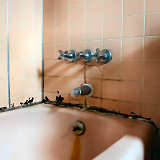
These products are easy to use and safe for your natural stone. - Q. How do I clean mildew from the grout on my marble shower floor? I am getting many conflicting answers... rubbing alcohol, bleach,
white vinegar, Tilex®, peroxide, etc.
A. Of the numerous "solutions" you've listed, none are safe for natural stone. The mildew stain remover was formulated to do the job without damaging your stone's surface. It's safe, easy to use, and it works! It does need to be rinsed though. - Q. I've purchased honed travertine for my bathroom natural stone flooring. We want the colors to stand out. I would like to purchase
a sealer from you that would enhance the stone's characteristics. Please let me know what you recommend and where I can purchase it.
A. You can find an incredible stone color enhancer here. This will give your tiles the "wet look". Make sure to wait a few weeks after the installation of your tiles before applying the color enhancer. - Q. We had marble natural stone flooring installed in my young son's bathroom. Is there a way to keep urine from staining the floor?
A. Urine is an acid. Unfortunately, there is nothing on the market today that will repel acid. Thoroughly clean the area daily with a cleaner that is safe to use on natural stone. - Q. I recently had a marble floor installed in my home and now there's dull spots all over it. What is causing this and how can I
get rid of them?
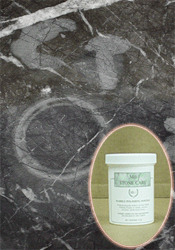
A. This is commonly referred to as etching. Etching eats away at a polished surface and produces those rough dull marks that you see on your flooring.
Mild etching still feels smooth and can be removed with a polishing powder such as this polishing Powder. If the etching is more serious, you will need to contact a natural stone restoration professional. - Q. If I remove the tile and carpet covering my terrazzo flooring can it be refurbished? If so, how?
A. Yes. You need the services of a natural stone restoration professional to regrind and refinish your terrazzo flooring. - Q. I am considering natural stone flooring for my bathroom. What do you suggest?
A. Polished marble, travertine, or granite. As a word of caution, a polished floor is slippery when it's wet. Also look at honed finished marble and travertine.
 |
 |
| Sealers | Enhancers |
|
|
 |
|
| Heavy Duty Tile & Grout |
Stone, Wood & Tile Floors |
Marble Repair Polish |
Floor Polish |
 |
|
 |
| Mold & Mildew Stains |
Heavy Duty Tile & Grout |
Stone Wipes |
We'll continue to publish articles that are informative, reliable and easy to understand. Yes, we would like to sell you our natural stone care products, but we also want you to be an informed buyer.