Home
Our Products
Product Use
Shop All Products
Care Kits
Cleaners
Polishes
Sealers
Shipping Policy
Testimonials
Stone Care Tips
FAQ's
Articles
Contact Us


Natural Stone And Stains

Limestone, Travertine, Marble and Granite Stains


Article -

What Are Stains?

MB-4 Impregnator/Sealer For Stone And More
MB-4 Sealer

A stain is an unwanted mark of discoloration which cannot be removed by just washing and wiping. Stains require special treatment to remove them.

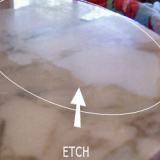
Surface damage and temporary conditions are often confused with staining. Efflorescence, etching, mineral deposits, soap film, stun marks, water spots, water rings, and even wet stone are not true stains. Each condition is treated differently.

These are NOT true stains and stain removal procedures will NOT work.


A True Stain Is Always Darker Than The Stained Material.

If it appears as being of a lighter color, it is not a stain but either a mark of corrosion (etching) made by an acid or a caustic mark (bleaching). In other words, a lighter colored 'stain' is in fact always surface damage and has no relation whatsoever with the absorbency rate of the damaged material or stone.
There Is Not A Single Exception To This Rule!


Understanding Stains

To understand stains, let's take a piece of fabric. Fabric is usually absorbent and if we spill liquid on it, the material will absorb it. If it's water, we'll only have a temporary 'stain'. Once the fabric dries, it will revert back to its original color. But... if we spill coffee or cooking oil on it, we create a true stain. Why? Because the fabric will actually absorb the staining material and change the fabrics color permanently or until it is removed.

On the other hand, if we spill bleach on the same fabric, we still have a discoloration BUT, this can hardly be defined as a stain. Why not a 'stain'? Because it's permanent damage to the die that originally made the color of the fabric.

Just as with fabrics, true stains are the discoloration of natural stone, produced by a staining agent that is absorbed by the stone.

Avoiding Stains on Your Natural Stone

To avoid stains, always wipe up spills as soon as possible. And If Needed, apply an impregnating sealer such as our MB-4 Impregnating Sealer. An impregnating sealer is used to repel and/or to inhibit liquids from entering the stone. Here's what happens...
  1. The impregnating sealer is applied.
  2. It soaks into the stone (does not and should not sit on the surface).
  3. It "fills in" those open pores or small spaces so the staining material cannot.
If you happen to stain your natural stone, most can be removed using a method called poulticing. Basically, a poultice is used to "suck the stain" out of your stone. Always Remember: The longer a stain remains, the deeper it penetrates, and the harder it is to remove.

Top of Page -
Natural Stone And Stains


My Granite Care Home | Our Care Products | Product Use
Shop All Products | Care Kits | Cleaners | Polishes | Sealers
Care Tips | Articles | FAQ'S | Privacy Policy | Contact Us


footer for stains page